

Getting ready for nursing school can make it seem like you need to buy half the nursing aisle before your first class. Between uniforms, clinical equipment, study supplies, and all the products recommended online, the shopping list can grow quickly. In reality, many students use the same handful of items week after week.
The most useful nursing school essentials are the things that support your classes, clinical days, and study routine. Start with what your program requires, then add other items as you learn what works for you. This approach keeps your bag lighter and can save you from spending money on equipment you rarely use.
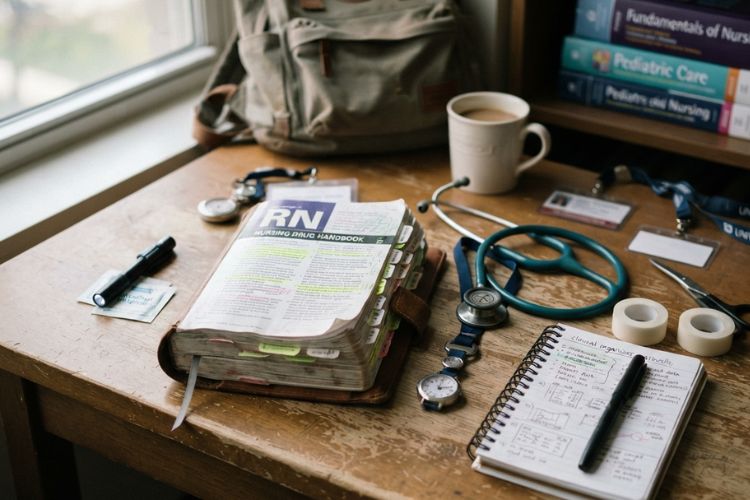
Every program has its own rules, so the official supply list should come before anything you see online. Your school may specify scrub colors, shoes, identification, clinical equipment, or even what can be attached to your uniform. Once you know those requirements, choosing the rest becomes much easier.
The following nursing school essentials cover the items students are most likely to need regularly without turning your shopping list into a collection of unnecessary nursing gear.
Scrubs will become a regular part of clinical days, but wait until your program confirms the required color and style before buying several sets. Some schools require embroidered uniforms or particular brands. Look for comfortable, washable scrubs with enough pocket space for the small items you are allowed to carry.
Shoes deserve just as much attention. Clinical days can involve hours of walking and standing, so choose a supportive pair that fits properly and follows your school’s dress code. A design that is easy to clean can also make life easier after a busy clinical day.
A stethoscope is one of the nurse must-haves that can follow you from skills lab into clinical practice. You do not have to start with the most expensive model. Look for something dependable that meets your program’s requirements, and label it with your name so it does not get mixed up with someone else’s equipment.
Think about how you will carry it too. Keeping a stethoscope around your neck or inside a pocket may not suit everyone, especially when your pockets are already full. A holder gives it another place between uses. Students looking for this option can buy stethoscope clips online and choose one that works with their clinical setup.
Small clinical tools tend to be the items students reach for repeatedly. Depending on your program, this may include a watch that displays seconds, a penlight, bandage scissors or trauma shears, pens, a small notebook, and possibly a clipboard. Check the requirements before purchasing specialized equipment because some supplies may already be available in the lab or at your clinical site.
Instead of stuffing every small tool into a different pocket, keep them in one pouch inside your bag. You’ll know exactly where to look when you need something before class or clinicals. They may seem like ordinary supplies, but you’ll probably reach for them far more often than many of the extras marketed to nursing students.
Once you start wearing scrubs regularly, you may notice how quickly pocket space disappears. Your student ID needs to stay accessible, and your stethoscope is too large to share a pocket comfortably with pens, notes, and other equipment. A badge reel can keep your ID in place, while a stethoscope holder gives your stethoscope its own spot.
These accessories can be helpful additions to your nursing school essentials, but there is no reason to attach everything you own to your uniform. Check your clinical site’s rules first and choose accessories based on problems you actually encounter. If your stethoscope is comfortable around your neck or in a pocket, you may not need another carrying option yet.
By the end of the first few weeks, most students figure out that carrying everything “just in case” only makes the day harder. A good nursing school bag should have enough room for what you need without becoming too heavy to carry around campus or clinicals.
Your nurse bag essentials may include a laptop, charger, notebook, water bottle, lunch, and clinical gear. Choose a bag with a few compartments, and use a small pouch for loose items so you are not digging through everything to find one pen or tool.
Not everything on your list needs to fit inside a scrub pocket. Nursing school also involves lectures, reading, assignments, skills preparation, and plenty of exam revision. A laptop or tablet, notebooks or binders, pens, highlighters, and a planner are enough to build a basic study setup. Flashcards can also be useful for reviewing medications, terminology, lab values, and other information you need to remember.
There is no need to buy every study tool another nursing student recommends. Some people learn well with handwritten notes and physical flashcards, while others prefer digital notes and study apps. Treat your preferred study materials as personal nurse must-haves and spend a few weeks learning what actually helps you before investing in extra supplies.
What goes into your bag should depend on where you are going that day. For class, you may only need your laptop, charger, notebook, and water bottle. A clinical day may require your stethoscope, ID, approved tools, and other supplies listed by your instructor.
Common nurse bag essentials include:
Keep the equipment you use most somewhere you can reach without emptying the entire bag. If you would rather keep your stethoscope on your scrubs during clinicals, stethoscope clips for nurses offer another option. Over time, your nurse bag essentials will become much easier to narrow down because you will know exactly what you reach for and what stays untouched.
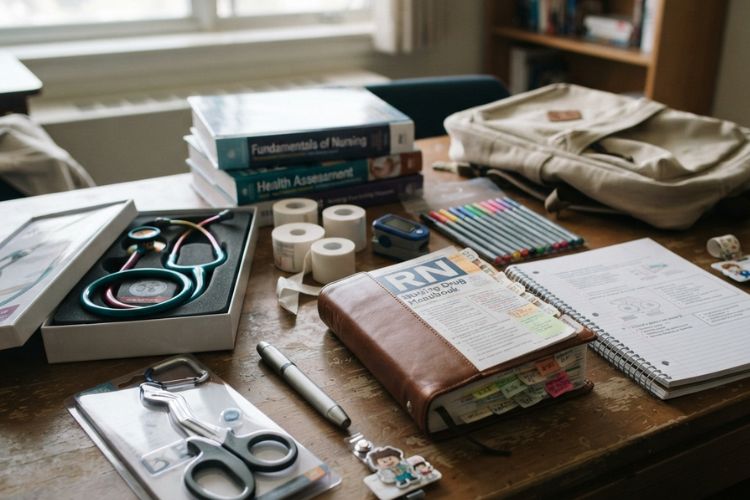
It is easy to overspend before the semester even begins. Avoid stocking up on extra scrubs until your school confirms the required uniform. Expensive specialized equipment, multiple reference books, several pairs of clinical shoes, and large collections of nursing accessories can also wait until you know whether you actually need them.
Start with the required nursing school essentials and let experience fill in the gaps. You might discover that you need more pocket organization, another set of scrubs, compression socks, or a better lunch bag after a few weeks. Buying those items when there is a real need behind them is much more useful than trying to predict your entire nursing-school routine before the first day.
Nursing school already brings enough new information without adding an oversized shopping list to it. Begin with the items your program requires and focus on things you are likely to use regularly: comfortable uniforms, supportive shoes, a dependable stethoscope, basic clinical tools, study supplies, and a bag that works for your schedule.
Your nursing school essentials can grow with you as the semester progresses. ScopeClip can be a helpful addition if you decide you want a separate place for your stethoscope instead of using your neck or scrub pocket. For everything else, give yourself time to learn what your own school day looks like before filling your bag with extras.
What are the most important nursing school essentials?
Start with scrubs, supportive shoes, a stethoscope, basic clinical gear, study supplies, and a sturdy bag. Always check your school’s requirements first.
What should a nursing student bring to clinicals?
Bring your ID, stethoscope, pens, and required clinical tools. Check your instructor’s list since each clinical site may have different requirements.
Do nursing students need their own stethoscope?
Many nursing programs require students to have a stethoscope for skills practice and clinicals. Check your school’s requirements before buying one.
What should I buy before my first semester of nursing school?
Buy the items specifically required by your program first. Wait until classes begin before spending money on extra equipment or accessories you may not use.